Applied AI product engineering — since 2018

AI systems that survive contact with the real world.

We design, build, and integrate AI and computer vision for industry, biotech, and medical technology — from feasibility on your data to production on your hardware.

MÁLAGA, ES · EST. 2018 · NASA DSFC WINNING TECH · XPRIZE WILDFIRE FINALIST

CapabilitiesTap to explore

NASA

Deep Space Food Challenge

We engineered AI systems behind the winning food-production technology

Finalist

XPRIZE Wildfire

Finalist in the Space-Based Detection & Intelligence track

PhD

Led engineering

Universitat de Barcelona; peer-reviewed medical-imaging AI research

Est. 2018

Independent AI studio

Trusted by clients across Spain, the UK, and beyond

Services

What we build

One team across AI, software engineering, mathematical modeling, and hardware integration. You work directly with the engineers who build your system.

01

Computer vision

Detection, measurement, and inspection that hold up in real conditions — factory floors, labs, and clinics.

  • Quality inspection and defect detection on production lines
  • Microscopy and laboratory image analysis
  • Medical imaging and diagnostic decision support
  • Object detection, segmentation, measurement, and calibration
  • Edge deployment on GPU and embedded hardware, camera and sensor integration
02

Language AI & RAG

Language AI grounded in your documents and data, engineered so answers come with sources — not hallucinations.

  • Retrieval-augmented assistants over technical documentation, manuals, standards, and reports
  • Training and fine-tuning LLMs on your domain data and terminology
  • Document intelligence: extraction, classification, and structured summaries with citations
  • Automated report generation from operational data
  • Evaluation, guardrails, and human-review workflows

03

Industrial process AI

AI connected to machines, sensors, and control systems — not just dashboards.

  • Real-time monitoring with vision and sensor fusion
  • Predictive maintenance and anomaly detection
  • Process optimization and mathematical modeling
  • PLC and SCADA integration (Modbus TCP/IP and industrial protocols)
  • Operator dashboards, logging, and automated reporting

04

Industrial model optimization

We make models run orders of magnitude faster with a fraction of the compute — ours, or the ones you already have in production.

  • Quantization, pruning, and distillation against an agreed accuracy budget
  • TensorRT and ONNX graph and runtime optimization
  • Deployment on NVIDIA Jetson and embedded GPUs
  • NPUs and edge accelerators for low-power inference
  • Latency, throughput, and energy verified on your real hardware

05

AR/VR & simulation

Immersive simulation for industry — and functional demos that make complex systems easy to present, explain, and sell.

  • Industrial process simulation and operator training environments
  • Interactive 3D environments connected to live system data
  • Functional AR/VR demos for presentations and stakeholder communication
  • Synthetic data generation from simulated environments
  • Delivery to headsets, desktop, and web

06

Something else in mind?

If it involves AI, cameras, sensors, or data in a real technical environment, we have probably built something close to it. Tell us what you are trying to do.

Start the conversation →

Solutions

How we solve it

Most of our client work is confidential, so instead of project write-ups, here is how we actually approach each class of problem — method, architecture, and what you get.

Computer vision · Medical

Medical imaging & diagnostic support

Segmentation, measurement, and decision support built with research-grade rigor.

Prototype in 8–12 weeks See the approach →
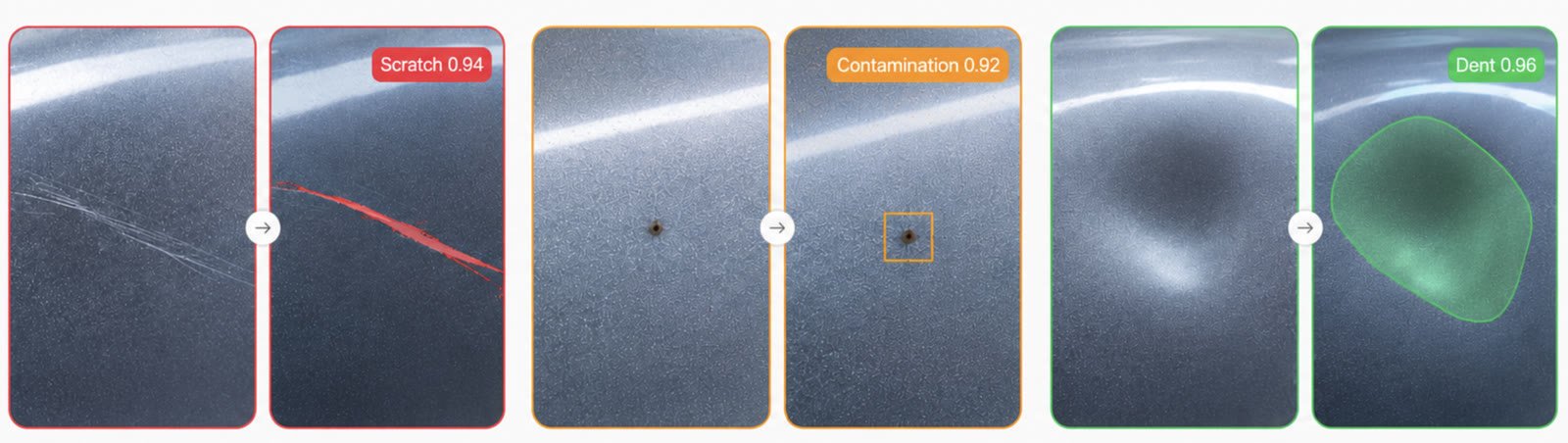
Surface defect detection: scratch, contamination, and dent identified with confidence scores

Computer vision · Industry

Visual quality inspection

Detect defects, measure parts, and monitor processes with cameras your line can trust.

First working version in 6–10 weeks See the approach →

Computer vision · Earth observation

Satellite & aerial monitoring

Detection and change monitoring from satellite and drone imagery, at scale.

First working version in 8–12 weeks See the approach →
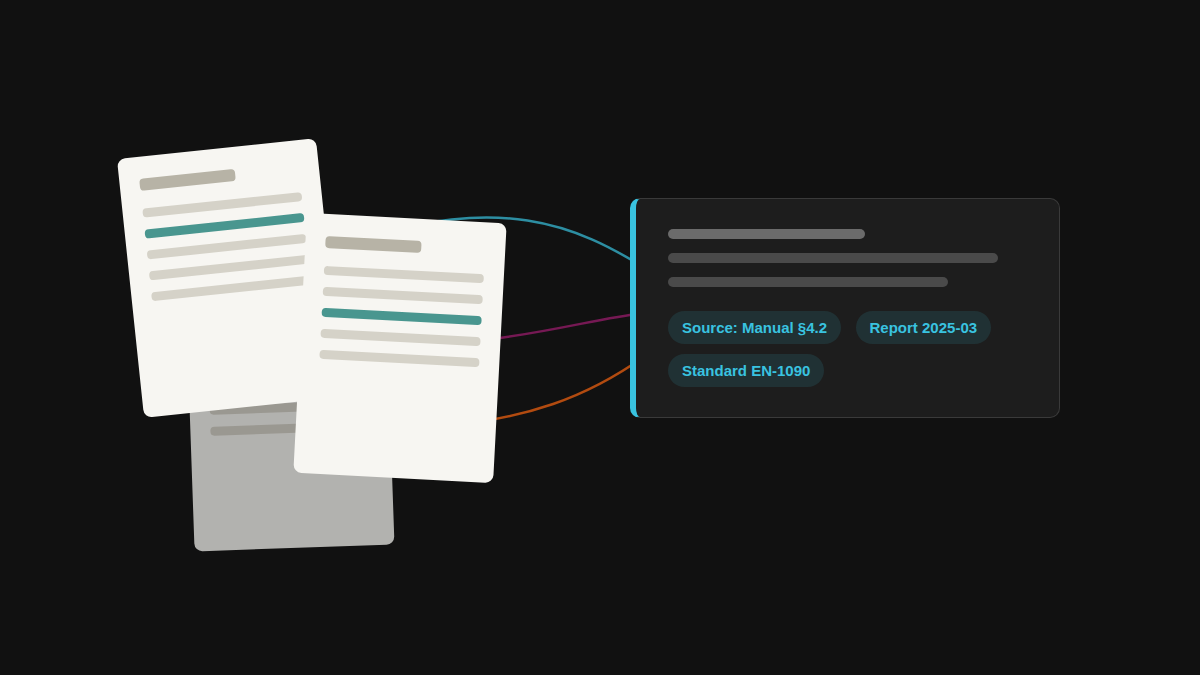
Documents linked to an AI answer with source citations

RAG & LLM systems

RAG assistants & document intelligence

Language AI over your manuals, standards, and reports — with answers that cite their sources.

First working version in 4–8 weeks See the approach →

Time series & operations

Forecasting & anomaly detection

From sensor streams and operational data to early warnings and honest forecasts.

First working version in 6–10 weeks See the approach →
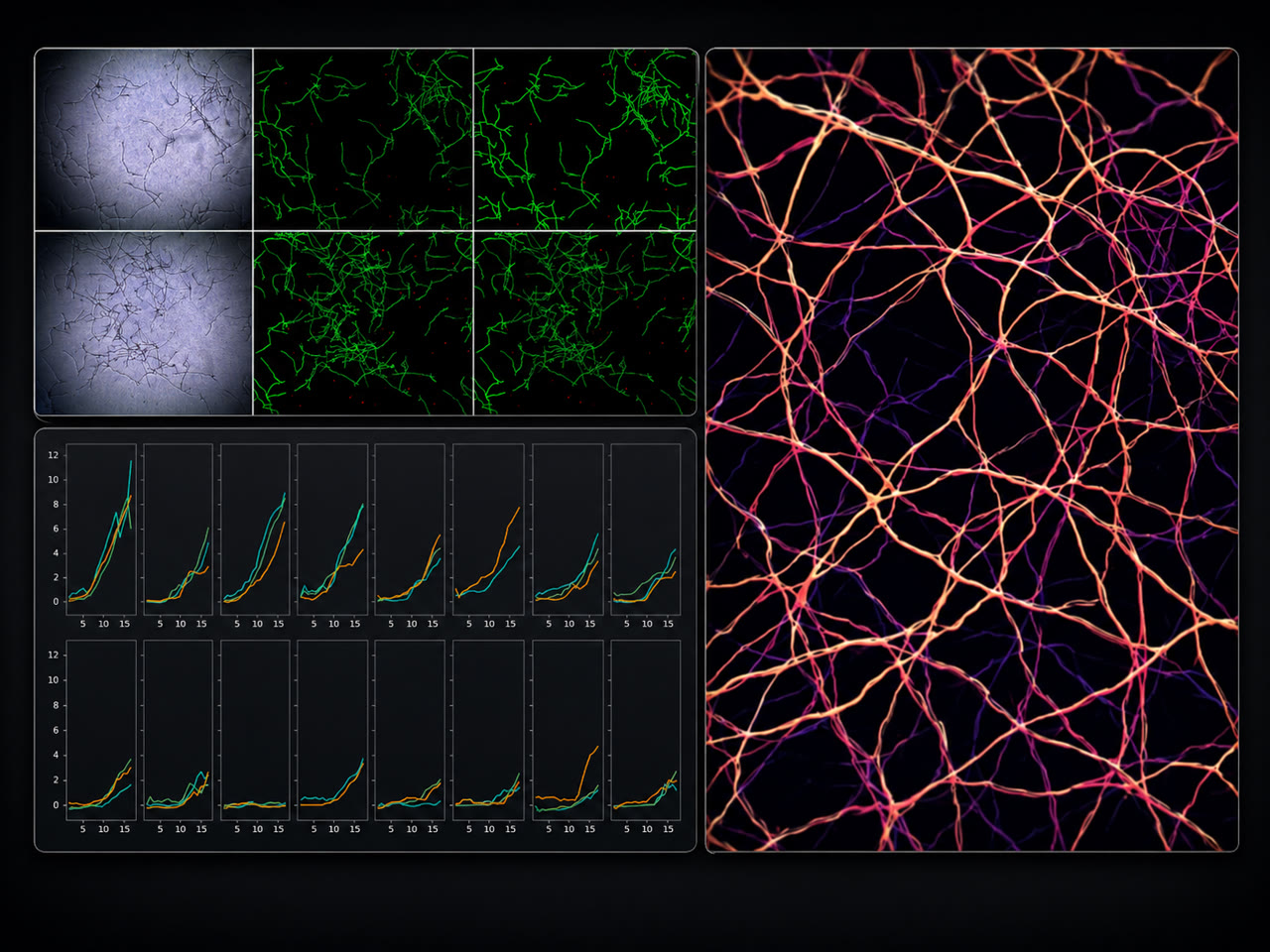
Microscopy segmentation and growth-curve analysis dashboards

Computer vision · Life sciences

Laboratory & microscopy image analysis

Counting, measuring, and classifying — hours of microscope work turned into minutes.

First working version in 6–10 weeks See the approach →

AR/VR & simulation

AR/VR & industrial simulation

Simulate the system before you build it — and demo it so anyone understands it in minutes.

Functional demo in 3–6 weeks See the approach →
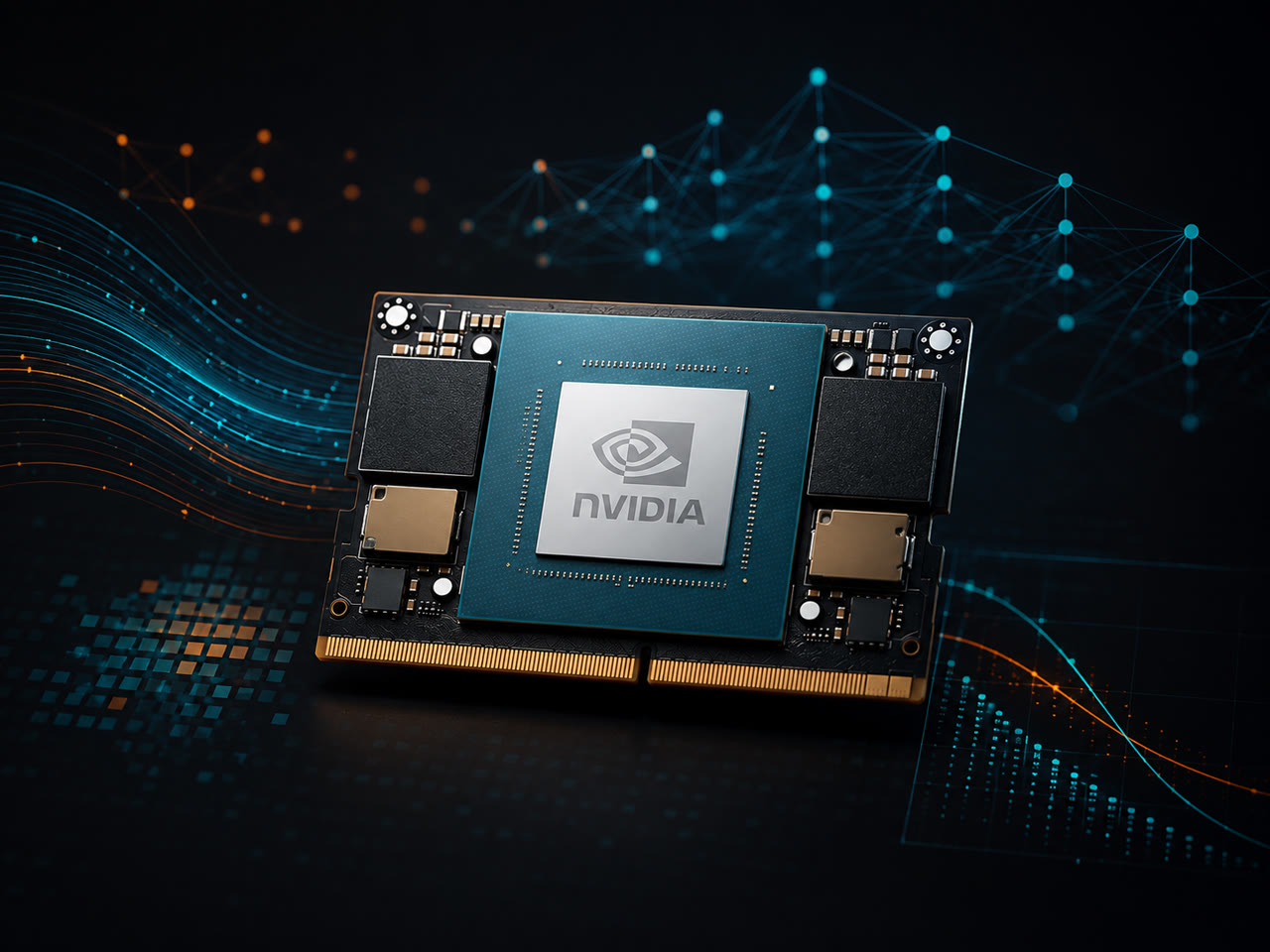
NVIDIA embedded AI module for accelerated inference

Optimization · Edge & embedded

Industrial model optimization

The same model, orders of magnitude faster and leaner — on NVIDIA embedded systems, NPUs, and the hardware you already own.

First measured gains in 2–4 weeks See the approach →

How we work

Feasibility-First Delivery

Our method is simple to state: prove feasibility on your data before you commit to a build — then engineer the system into your operations.

01Free · 30 min

Intro call

We map your problem, data, and constraints. You leave with an honest read on feasibility — whether or not we end up working together.

02Fixed fee · 2–3 wks

Feasibility sprint

Data audit, technical approach, a first working demo where the data allows, and a build / no-build recommendation with roadmap and budget. The fee is credited in full if we continue.

03Milestone-based

Build & integrate

We engineer the system and integrate it with your workflows, hardware, and people — with acceptance criteria agreed up front.

Clients & products

Who we work with

GI builds AI systems for clients across biotech, medical diagnostics, and industry — in Spain and internationally. Much of this work is confidential; we share detailed references on request.

Trusted by teams in Spain, the UK, and beyond

Industries we work in

Medical imagingVeterinary imagingMicrobiologyBiotechnologyIndustrial automationEducationAR/VR & simulationAutomotive & mobilityEarth observationFintech

Products built by GI — try our AI live

About

Who leads GI

Lucas Gago

Lucas Gago, PhD

Director

Lucas holds a PhD in Mathematics and Computer Science from the Universitat de Barcelona, specialized in deep learning for medical imaging, with peer-reviewed research in journals including Computer Methods and Programs in Biomedicine and Biomedical Signal Processing and Control. After 10+ years leading AI teams, Lucas directs GI's technical work from opportunity discovery and system architecture through to delivered products. Google Scholar →

Nacho van Megen

Nacho van Megen

Tech Lead

With more than 30 years leading high-level engineering and software projects, Nacho has built a career turning ambitious technical designs into systems that ship — and keep running. At GI he directs architecture, implementation, and deployment across client projects, bringing the discipline of large-scale engineering to every build: AI robust enough for real operations, from lab prototypes to production lines.

Recognition

Engineering behind a NASA-winning technology

Generative Intelligence engineered AI systems behind the food-production technology of Eternal's space division, Kernel Deltech, winner of NASA's Deep Space Food Challenge. GI was also an XPRIZE Wildfire finalist in the Space-Based Detection & Intelligence track.

Receiving the NASA Deep Space Food Challenge award

FAQ

Questions clients ask us

How much data do we need to get started?

Usually less than teams fear, and almost never the amount they guess — in either direction. The honest answer depends on your problem and how variable your process is, which is exactly what the feasibility sprint establishes on your real data before you commit to anything.

How long until we see something working?

A rapid prototype takes 2–4 weeks. First working versions of full systems typically land in 4–12 weeks depending on the solution — each solution page on this site states its typical range.

What does a project cost?

The feasibility sprint is a fixed fee, quoted on the intro call and credited in full if we continue to the build. Builds are milestone-based with acceptance criteria agreed up front, so you always know what you are paying for and what done means.

Do you sign NDAs?

Yes, routinely — most of our client work is under NDA, which is why this site shows solution playbooks instead of project write-ups. We are comfortable working inside your confidentiality requirements.

Who owns what we build?

Our default is that you own the deliverables built for your project. Ownership and licensing terms are agreed clearly in the engagement contract before work starts.

Can you work with our existing hardware and PLCs?

Yes — that is a specialty. We integrate with industrial cameras, sensors, GPUs at the edge, and PLC/SCADA systems over Modbus TCP/IP and other industrial protocols.

Get in touch

Tell us about your process

A 30-minute call is enough to tell you whether AI can help — and what it would take.

Book a free feasibility call
hello@generativeintel.com

Or write to us here

We reply within two business days.